
Clinical Pilates vs. Regular Pilates: What's the Difference, and Which One Do You Actually Need?
Pilates has a reputation problem. Say the word and most people picture a studio class — soft music, a room full of mats, someone counting to ten. That's regular Pilates, and it's great. But it's not the same thing as clinical Pilates, and mixing the two up can mean you end up in the wrong class for what your body actually needs.
Here's the difference, and how to know which one is right for you.
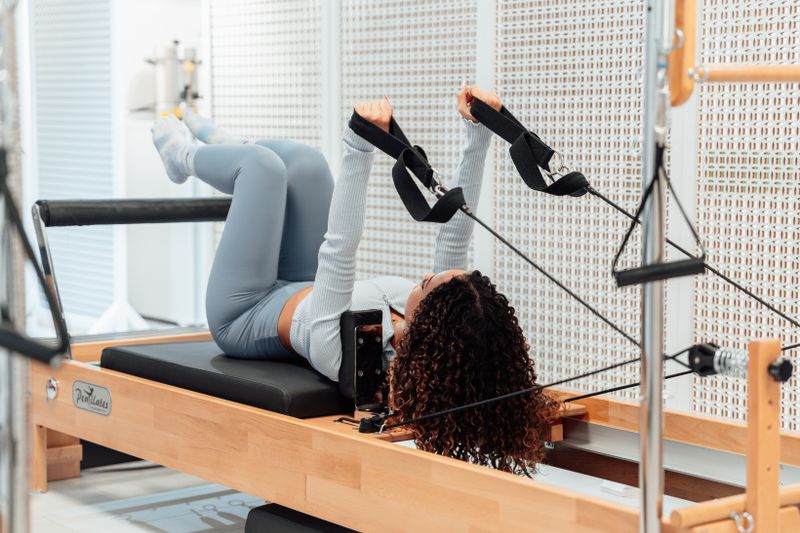
What Is Regular Pilates?
Regular Pilates is a general fitness class. It's built around core strength, flexibility, and controlled movement, usually taught in a group setting by a Pilates instructor.
It's excellent for:
- General fitness and toning
- Improving flexibility and body awareness
- Stress relief and low-impact exercise
- People who are already pain-free and want to stay that way
What it's not designed for is injury. A group instructor isn't trained to diagnose why your back hurts or adapt a session around a herniated disc, a post-surgery knee, or pelvic floor dysfunction. And in a class of 10–15 people, no one's watching your form closely enough to catch the small compensation patterns that keep an injury lingering.
What Is Clinical Pilates?
Clinical Pilates is Pilates run by a trained therapist. That one distinction changes everything about it.
- It starts with an assessment. Before you do a single exercise, a trained therapist looks at your posture, movement patterns, and the specific injury or condition you're dealing with.
- It's individually programmed. Your session is built around your body — not a generic sequence everyone in the room follows.
- It treats, not just tones. Exercises are chosen to target the actual muscles or movement faults contributing to your pain, whether that's a weak glute, a stiff thoracic spine, or poor pelvic control.
- It's usually one-on-one or in very small groups, so form gets corrected in real time.
- It progresses as you recover. As you get stronger, the plan changes with you — that's rehab, not routine.
Who Actually Benefits From Clinical Pilates?
Clinical Pilates tends to be the better fit if you're dealing with:
- Back or neck pain — building core and postural control around a specific problem area
- Post-surgery or post-injury rehab (knee, hip, shoulder) — restoring strength and movement safely
- Pregnancy and postnatal recovery — including pelvic floor and diastasis recti considerations
- Recurring injuries — where general exercise keeps aggravating the same spot
- Poor movement patterns — the kind an instructor can't spot but a trained therapist is trained to catch
If any of that sounds like you, a general Pilates class isn't wrong exactly — it's just not precise enough to fix the underlying problem.
Who's Fine With Regular Pilates?
If you're pain-free, injury-free, and just want a low-impact way to build strength and flexibility, a standard studio class is a great choice. There's no need to overcomplicate it.
The Bottom Line
Think of it this way: regular Pilates keeps a healthy body strong. Clinical Pilates helps an injured or recovering body get there safely — with a trained therapist making sure every movement is doing the right job.
If you're not sure which camp you fall into, that's exactly what an initial assessment is for. Our Pilates classes at ProPhysiotherapy are led by experienced therapists who can guide you to the right approach for your body.
To book an assessment, contact our Earlsfield clinic on 020 8879 1555, our Wimbledon clinic on 020 8946 2800, or email enquiries@prophysiotherapy.co.uk. Not sure if clinical Pilates is right for you? Our team will help you figure out the best path forward.