
Tech Neck: Why Your Phone and Laptop Are Giving You Neck Pain
Think about what you did in the first ten minutes after waking up this morning. If you checked your phone before you got out of bed, you are already part of the majority. The average British adult now spends over four hours a day looking at a smartphone screen, on top of the six or seven hours many of us spend at a laptop for work. That is a significant proportion of our waking lives spent in a position that the human spine was never designed to sustain for long.
The result has a name. Tech neck — clinically known as cervical flexion syndrome — is one of the fastest-growing presentations we see at our clinics, and it affects people of every age, occupation, and fitness level. If you regularly experience headaches, stiffness across the back of your neck, tension in your shoulders, or a nagging ache that builds as the day goes on, there is a reasonable chance this is the reason.
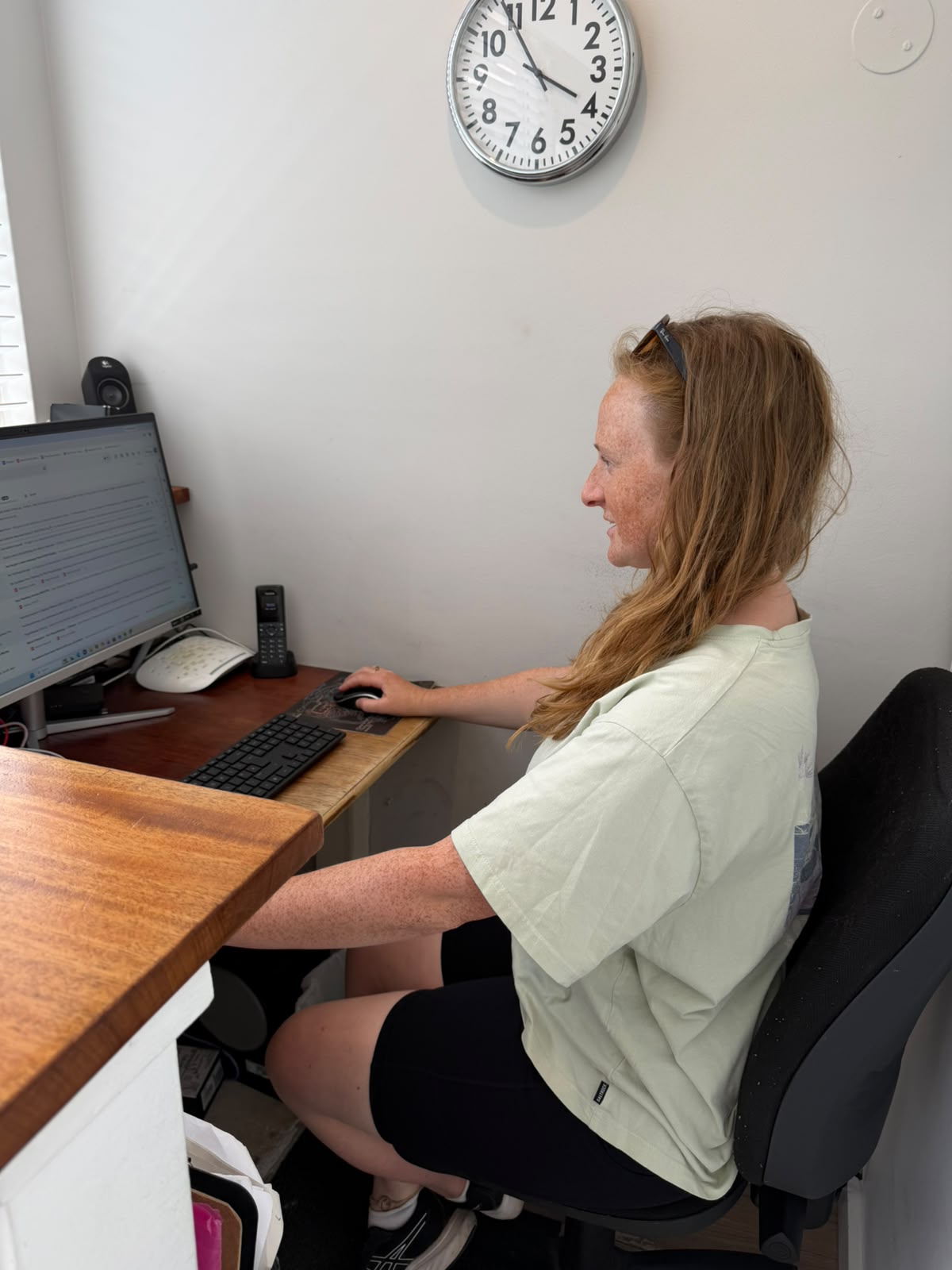
What Is Actually Happening to Your Spine?
Your head weighs roughly 5kg when it sits directly over your shoulders in a neutral position. That is already a considerable weight for your neck muscles and cervical spine to support across a full day. The problem is that most of us are not holding our heads in a neutral position. We are tilting them forwards and downwards to look at screens.
This seemingly minor shift has a dramatic effect on the forces running through your neck. Research has shown that at just 15 degrees of forward head tilt, the effective load on the cervical spine increases to around 12kg. At 30 degrees, a fairly typical phone-scrolling angle, it rises to approximately 18kg. At 60 degrees, which is not unusual when looking at a phone in your lap, the load approaches 27kg. Your neck muscles are absorbing the equivalent of more than five times the weight they were designed for, for hours at a time, every single day.
Over weeks and months, this sustained overload causes the deep stabilising muscles of the neck to weaken and fatigue. The larger, more superficial muscles compensate by working harder than they should, leading to the chronic tension and stiffness that many people simply accept as a normal part of modern life. It is not.
What Tech Neck Actually Feels Like
The symptoms are often so familiar that people stop noticing them. A stiff neck when you first wake up. Headaches that start at the base of the skull and creep upwards. A persistent aching between the shoulder blades. Tension that builds through the afternoon at your desk and eases slightly when you move around. Occasionally, pins and needles or a dull ache that travels down into one arm.
In more established cases, the postural changes become visible. The head sits noticeably forward of the shoulders. The upper back develops a rounded, kyphotic curve. The muscles at the front of the neck shorten and tighten while those at the back become long and weak, locking the body into a posture that perpetuates the problem even when screens are nowhere in sight.
Why Stretching Alone Does Not Fix It
Most people who recognise tech neck in themselves reach for a neck stretch. Stretching provides temporary relief, and there is nothing wrong with it, but it does not address the underlying problem. Tech neck is fundamentally a strength and control issue, not just a flexibility one. The deep cervical flexors, which are the small stabilising muscles that run along the front of your spine, have been progressively switching off while the surrounding muscles have been doing more than their fair share. Restoring normal function requires targeted rehabilitation, not simply loosening tight tissue.
This is where physiotherapy makes a meaningful difference. A thorough assessment will identify which muscles are underperforming, whether there are any joint restrictions in the cervical or thoracic spine, and whether any nerve irritation is contributing to your symptoms. Treatment typically combines hands-on manual therapy to address stiffness and pain, with a targeted exercise programme to rebuild strength, control, and postural endurance. For many patients, a few sessions produce noticeable and lasting change.
Practical Steps You Can Take Right Now
There are some simple adjustments that make a genuine difference alongside professional treatment:
- Raise your screens. Your monitor should be at eye level so your head sits directly over your shoulders rather than angling downward. The same principle applies to your phone: hold it up rather than looking down at it.
- Take regular movement breaks. Sustained postures of any kind place cumulative load on the spine. Getting up and moving every 30 to 45 minutes is one of the most effective things you can do to reduce the overall stress on your neck throughout the day.
- Practise chin tucks. Sitting or standing tall, gently draw your chin straight back, as if making a double chin, and hold for a few seconds before releasing. Done consistently, this reactivates the deep cervical flexors and counteracts the forward head position that drives the condition.
- Check your sleeping position. Spending eight hours with your neck in a poor position undoes much of the work your neck muscles do to recover during the day. A single pillow that supports the natural curve of your neck, keeping it aligned with your spine rather than propped up or unsupported, makes a real difference.
When to Seek Assessment
If your symptoms have been present for more than a couple of weeks, are getting gradually worse, include any pain or tingling that travels into your arm or hand, or are affecting your sleep or concentration, it is worth getting a proper assessment rather than hoping things resolve on their own. The longer tech neck is left unaddressed, the more established the compensatory patterns become and the longer the recovery tends to take.
At ProPhysiotherapy, we assess and treat tech neck and postural neck pain routinely at both our Earlsfield and Wimbledon clinics. If any of the above sounds familiar, we would be glad to help.
Contact our Earlsfield clinic on 020 8879 1555, our Wimbledon clinic on 020 8946 2800, or email enquiries@prophysiotherapy.co.uk.