Work-related Upper Limb Pain or WRULD is the unwieldy title that health professionals are now using to describe the range of symptoms that plague computer users. Once thought of as a problem with overusing tendons repetitively, the latest research is attributing many of the symptoms of arm pain at work to either, problems in the neck or nerve irritation from being held on stretch over hours and hours. The symptoms can include pins and needles, achy pains and/or numbness in any part of the upper arm, forearm or hand.
Despite the new acronym, it’s a condition with no name. Medical testing usually finds no disease or inflammation. It can vary from a mild ache and annoyance at work to a life-altering event that reduces some people’s ability to work.
The problem seems to be that the nervous system’s health is dependent on movement and a good blood supply. Indeed, up to 20% of the oxygen you breathe in goes to keeping the oxygen-thirsty nervous system functioning normally. Anything that reduces this oxygen supply, even minutely, can be detrimental to the nerve. It will continue to function but will be pain producing. Smokers and diabetics obviously will be susceptible to this but poor seating, strained postures and stiff neck and back joints may all contribute to the presentation.
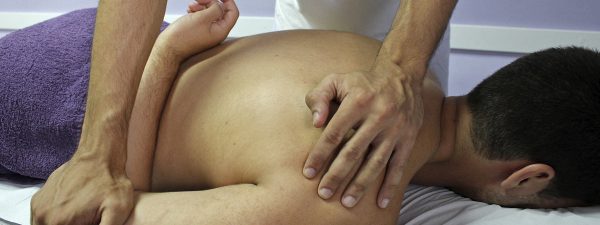
The treatment? The answer is very individual according to Peter Mulvey (Spinal Specialist at ProPhysiotherapy). The research has found that once irritated the major nerves entering the arm can stay irritated for many months and can become a chronic condition. An ergonomic / workstation assessment is clearly as important as a course of physiotherapy. Physiotherapy aims to improve the health and mobility of the tissue.
“I encourage all patients to improve the movement in their upper backs where the nervous system exits the spine and dives into the arm. Stretching out tightened bands of muscle resulting from poor posture also helps tremendously with pain. Strengthening the spine, so that it can maintain good posture for an entire day without fatiguing helps to prevent recurrence.”
Other options mentioned in the literature have been the use of TENS units (electrical treatment that stops pain messages going to the brain), massage, acupuncture and manipulation. As each presentation is different and individual, any of these treatments may be appropriate, so an assessment from a chartered physiotherapist or GP is advised.
Any hope for the future?
The research is focussing on physical treatments, better pain medications for nerve pain and prevention. The European laws encouraging healthy work places may help to reduce the numbers of people affected but the statistics have not been collated on this yet. Scientists are also looking at risk factors why some people are affected and why others aren’t. In the mean time, clinical opinion seems to suggest, good posture, healthy active lifestyles and exercise may be critical factors in improving this distressing condition.
Is this inevitable? Is it to be accepted that you cannot get one without the other?
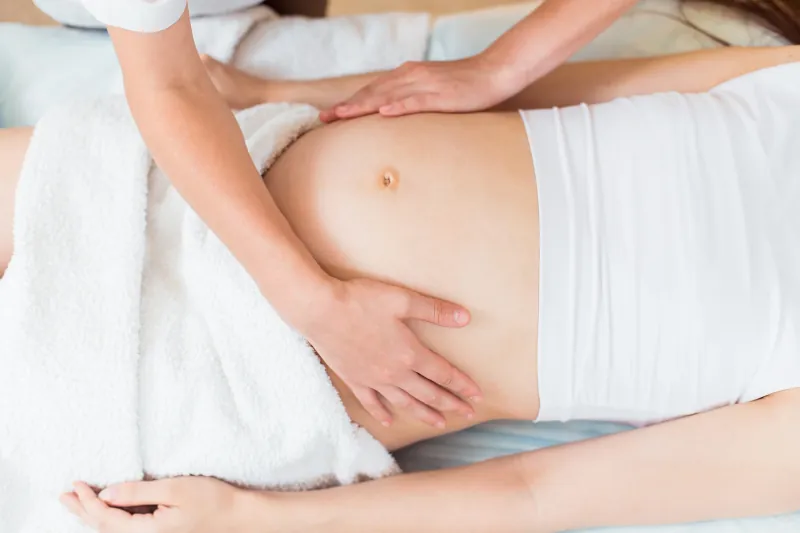
Although back pain is not experienced by every pregnant woman, up to 80% will have some back or pelvic pain during their pregnancy (Bastiaanssen et al, 2005).
So why does it happen and when can it be expected? Back pain can occur during any time during pregnancy, but it usually occurs during the last trimester due to the increase in weight of the baby. This can cause the lower (lumbar) spine to curve more placing excess stress on the joints, ligaments, discs and muscles of the back often leading to pain. Hormone levels of oestrogen and relaxin also rise which causes the ligaments in particular, to become more lax and stretch more; however this is essential for labour.
So does this mean that I should rest and keep my feet up for the next few weeks or months? Absolutely not! In the majority of cases exercise helps reduce the risk of back pain (Ostgoward et al, 1994), although good techniques are needed to relieve the pain.
Here are 10 tips to try and help reduce your back pain during pregnancy:
If symptoms do not improve, do not put up with them and seek professional help. Pain during pregnancy is treatable!
For more information or to book an assessment contact ProPhysiotherapy, Wandsworth, London on (020) 8879 1555 or email us at enquiries@prophysiotherapy.co.uk
Do you consider yourself to be flexible or even double-jointed? Does your skin stretch a lot? Can you now (or could you ever) place your hands flat on the floor without bending your knees? Can you now (or could you ever) bend your thumb back to touch your forearm? As a child did you amuse your friends by contorting your body into strange shapes or could you do the splits? As a child, did your shoulder or knee cap dislocate on more than one occasion? Have you ever done party tricks with your joints e.g. popping them in and out?
If the answer is yes to some of those questions, you may a high chance that you have a collagen disorder which lies behind some chronic joint pains. It’s called Benign Joint Hypermobility Syndrome (BJHS). It may be an advantage in sports and music where good joint flexibility can improve performance but on the other hand, it has been implicated in patients who have had a history of various hard to diagnose aches and pains.
Professor Rodney Grahame, a specialist Rheumatologist in UCLH, began looking at the phenomenon back in the late sixties and has since been a leading light in the research behind the genetic basis of this condition, its management and its struggle to be recognised by other health care professionals.
The diagnostic criteria is called the Brighton Score. The Beighton Score was the previous system where 9 peripheral joints were examined for extensive range. It has been integrated into the system below.
| Major Criteria | Minor Criteria |
|---|---|
| A Beighton Score of 4/9 or more either currently or historically | Beighton score of 1-3/9 |
| Joint pain in 4 or more joints for at least 3 months | Pain in 1-3 joints (>3 months) or back pain |
| Subluxation/Dislocation in more than 1 joint or in 1 joint on more than one occasion. | |
| Soft tissue rheumatism – more than 3 lesions e.g. epicondylitis, bursitis, tendonitis. | |
| ‘Marfanoid habitus’ e.g. large arm to trunk length ratio, long hands, tall | |
| Excessive skin extensibility or scarring | |
| Drooping eyelids | |
| Hernias, vaginal or rectal prolapse |
A positive score is defined as either, one major and two minor; four minor or two major criteria.
Collagen is one of the building blocks of the body. It gives the body its intrinsic toughness and is in found in most structures in the body. BJHS seems to be a genetically linked condition where the collagen is a lot less robust and is more elastic and flexible. In most people, this will have no consequences. In some, symptoms may only occur when there is a change of job, lifestyle or new loads are imposed upon the body. In a few, there may be problems from teenage years until middle age. It represents a wide spectrum of clinical possibilities.
The best management of this condition is physiotherapy. Expert Physiotherapists will look at faulty movement patterns and correct them, strengthen the supporting muscles, educate regarding joint care and provide functional training that has been shown to prevent the risk of injury such as balance re-training and stability training.
The research on the topic is looking at why some BJHS patients have a lower tolerance to pain than the rest of the population and how to screen for it quickly so that GPs and other health care professionals can identify it quickly.
What is good posture? Do I have good posture? Why does it matter?
Posture does matter. Poor positioning of your spine means that your head, arms and legs all have to be held in a position they weren’t designed for. Muscles have to work under strain. The joints are held on stretch for hours. Your head which weighs about 8kg is held out away from the body like a crane: the muscles holding it up have to work at a disadvantage the whole day and sooner or later their blood supply becomes compromised, the nerves become irritated and the soft tissues begin to cry out for some relief. If this continues, a pattern forms. Some tissues get tighter and stiffer, others are held in a strain having to work considerably harder than usual. Over some months, you develop achy neck and shoulders, discomfort in your mid-back, maybe an uncomfortable lumbar spine and a strained feeling in your arms. And it doesn’t seem to go away. Poor posture seems to be a factor in nearly every presentation of muscle and joint pain that has come on gradually without any known trauma.
So apart from looking more confident, your lungs expanding better and improved organ function in your abdominal cavity, postural correction can help relieve achy pains that seem to have become imbedded in your body and have been passed off as a ‘chronic pain’ from hurried healthcare workers. Admittedly, all pain needs to be thoroughly assessed by an expert, such as a GP or chartered physiotherapist, but there is a lot that individuals can do to help themselves.
Here are our top ten tips:
Bastiaanssen et al, 2005 :
80% o fpregnant women get pain in the pelvic region or low back at some point.
American pregnancy association
50-70% experience back pain at some point during pregnancy.
What causes back pain during pregnancy?
Back pain during pregnancy is related to a number of factors. Some women begin to experience lower back pain with the onset of pregnancy. Women who are most at risk for back pain are those who are overweight or had back pain prior to pregnancy. Here is a list of potential causes of back pain or discomfort during pregnancy:
How can you prevent or minimize back pain during pregnancy?
Back pain may not be prevented completely, but there are things that you can do to reduce the severity or frequency. Here are a few steps you can take to help reduce the back pain you are experiencing:
Symphysis Pubis Dysfunction / Pelvic Girdle Pain
Research has shown that these symptoms can occur in 1:36 pregnancies (Owens at al 2002) and therefore it can affect a large number of women.
These symptoms are frequently passed off as the ‘normal achey pains of pregnancy’ which is unfair to these women and it can be embarrassing for them, as they try and put up with the pain. Symptoms do not always resolve after giving birth either.
What is SPD / PGP?
Part of the difficulty in diagnosing it is that SPD is a group of symptoms as opposed to a specific diagnosis. Symptoms usually include pain which can vary from a dull heavy ache to a sharp shooting pain, and occasionally are associated with clicking or grinding. Pain is usually felt in the groin, inside thigh, perineum or over the coccyx, sacro-iliac joint, or the sympyhsis pubis joint over the front of the pelvis.
When does it occur?
These symptoms rarely occur in the first trimester, but more commonly in the second and third trimesters, and can carry on long after the baby is born, but frequently mothers do not seek help after delivery as they normally have a few other things occupying their time!
Why do symptoms occur?
This is very debatable!
During pregnancy there is an increase in your hormone levels of oestrogen and relaxin. These hormones are needed to provide laxity for the ligaments during labour. It was thought that due to this laxity the symphysis pubis joint at the front of the pelvis, had more movement which would lead to more pain. This theory has been disputed recently as most symptoms occur in the latter stages of pregnancy, however the peak in relaxin levels occurs at 12 weeks, followed by a drop and then levels stabilise at about 24 weeks (Hansen, 1996). Some studies have shown that it is perhaps more to do with the joints on one side of the pelvis being stiffer compared to the other side and therefore not to do with laxity at all (Damen, 2001) however other studies suggest that one side of the pelvic girdle is more lax than the other (Buyruk, 1999).
So, it would appear that it is likely to be due to a mechanical problem with pelvic asymmetry. As a woman in pain, you probably don’t care which the cause of the pain is, as long as it can be treated! Well, the good news is that it can be fully assessed and treated by Chartered Physiotherapists.
Treatment Tips:
Below are some tips that you can try out and see if they help the pain:
For further information discuss it with your doctor, midwife or physiotherapist. Feel free to drop us a line at enquiries@prophysiotherapy.co.uk or telephone us on 020 8879 1555.
Why does my elbow hurt when I’m gripping something?
With Wimbledon around the corner and with the first glimmer of sunshine, there’s a rush out onto the courts across the capital to indulge in the national obsession with tennis. For some though, gripping the tennis racquet becomes increasingly painful so that, eventually, all gripping activities elicit excruciating elbow pain. The problem can occur in anyone who repetitively grips so it is not exclusive to racquet sports as the name may suggest. The muscles that pull back the hand into the grip position originate from the outside of the elbow and extend down the forearm. The symptoms can range from a dull forearm ache to sharp localised pain on making a fist or gripping.
Here’s some quick ways to improve the pain and get out there to enjoy the short lived British summer!
For any chronic problem, please ensure an assessment is carried out by a competent healthcare professional.
www.prophysiotherapy.co.uk